
Victor Letendré Narrative
Victor Letendre: A Métis Veteran’s Life of Courage and Resilience
Victor Letendre, a proud Métis veteran, was born in 1925 near Lac Ste. Anne, Alberta. His story exemplifies the remarkable contributions of Métis soldiers during World War II and highlights the resilience and cultural richness of the Métis Nation. From his humble beginnings on a small farm to his service on the battlefields of Europe, Victor’s life is a testament to the strength and determination of Métis veterans.
Early Life at Lac Ste. Anne
Victor grew up on a modest farm in Lac Ste. Anne, surrounded by the vibrant traditions of the Métis community. His family lived off the land, raising cows and chickens, and hunting and fishing to sustain themselves. From a young age, Victor contributed to the household by tending livestock, hunting partridge and rabbits, and gathering wild berries. He fondly recalled the clear waters of Lac Ste. Anne, where he would swim with friends and fish alongside his father, who was also an avid hunter. These formative experiences instilled in Victor a deep connection to nature and a strong work ethic.
In addition to subsistence activities, Victor’s upbringing was steeped in Métis culture. The family spoke French, Cree, and English interchangeably, a common feature of Métis households at the time. Music was also a cornerstone of their community, with fiddle tunes and traditional dances like the Red River Jig being central to social gatherings.
Joining the Canadian Armed Forces
At the age of 18, Victor left his home and joined the Canadian Army in 1944. His journey began at the Prince of Wales Armoury in Edmonton, where he enlisted. After completing basic training in Calgary and advanced training in Camrose, Victor embarked for Europe in July 1944, shortly after the D-Day landings. He became a member of the Second Canadian Division, serving with the Calgary Highlanders as an infantryman.
Victor’s training prepared him for the harsh realities of war, teaching him to use rifles, machine guns, hand grenades, and mortars. However, nothing could fully prepare him for the intensity of combat. His skills as a hunter, developed during his youth, proved invaluable on the battlefield, where stealth and precision often made the difference between life and death.
Experiences on the Front Lines
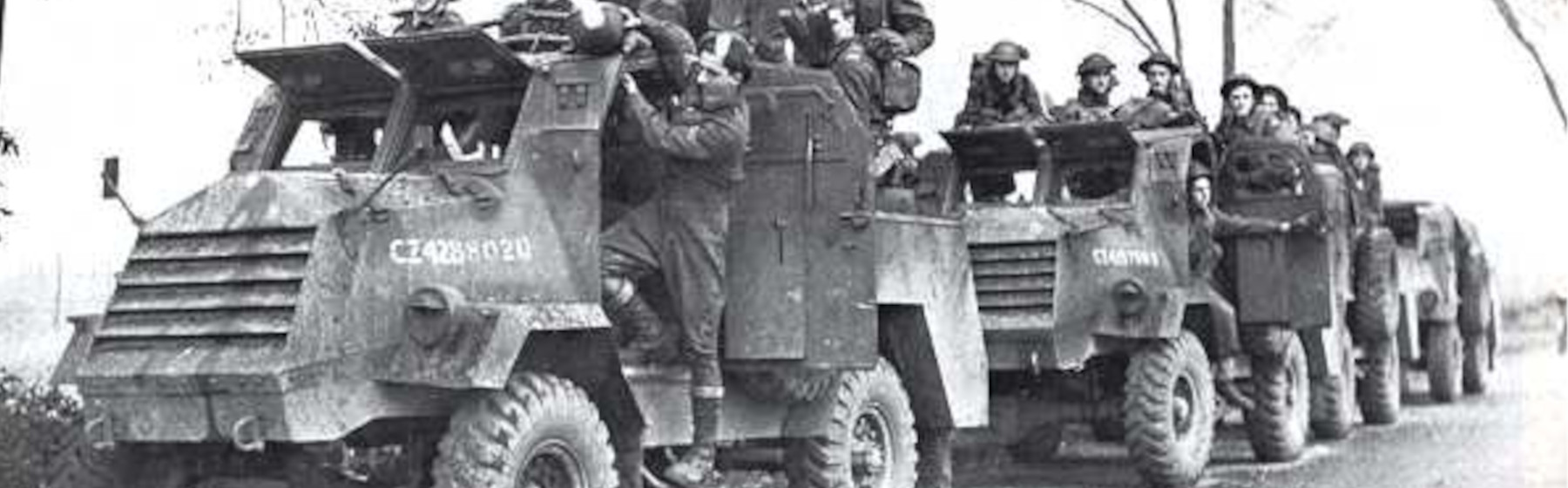
Victor's active service began in Normandy, near the city of Caen. He landed in France by barge and immediately faced fierce resistance from German forces entrenched in concrete bunkers known as pillboxes. Victor vividly recalled the strategies used to neutralize these strongholds, including the use of hand grenades, smoke bombs, and flamethrowers.
Over the next several months, Victor participated in battles across France, Belgium, and Holland. He witnessed the devastation of war firsthand, describing towns reduced to rubble and the hardships faced by both soldiers and civilians. Despite the fear and chaos of combat, Victor and his fellow soldiers pressed on, motivated by their mission to liberate occupied Europe.
In Holland, Victor experienced the challenges of fighting in flooded terrain, where dikes and waterlogged fields created additional obstacles. It was during this campaign that Victor developed pleurisy, a painful condition caused by fluid in the lungs. His illness eventually led to his evacuation to England and marked the end of his combat service.
Post-War Life and Contributions
Victor returned to Canada after being discharged due to his medical condition. Like many Métis veterans, he faced significant challenges reintegrating into civilian life. Initially denied the full compensation and benefits promised to returning soldiers, Victor struggled to gain recognition for his service. It took decades of advocacy before he finally received a fair pension.
Despite these hardships, Victor built a successful life for himself. He pursued multiple trades, ran his own business, and became a respected leader in his community. His dedication to Métis culture never wavered, and he remained deeply involved in preserving and promoting his heritage. Victor was also active in veteran organizations, serving as a trustee for the Lac Ste. Anne pilgrimage grounds and contributing to the Métis Nation’s efforts to support its veterans.
Recognition and Legacy
Victor’s contributions were eventually acknowledged in several meaningful ways. He was awarded the Queen’s Jubilee Medal and the Métis Veteran’s Medal, among other honors. These accolades, while long overdue, symbolized the respect and gratitude owed to Métis veterans for their sacrifices during the war.
Victor also participated in commemorative events, including journeys to Europe to revisit the battlefields where he and his comrades had fought. He was deeply moved by the warm receptions from European communities, who remembered and appreciated the sacrifices of Canadian soldiers. These experiences provided a sense of closure and affirmed the enduring impact of his service.
Conclusion
Victor Letendre’s life is a powerful story of resilience, sacrifice, and the enduring spirit of the Métis people. As a soldier, he fought bravely to defend freedom and democracy. As a civilian, he overcame systemic injustices and dedicated himself to preserving his culture and supporting his community. His legacy serves as a reminder of the vital contributions of Métis veterans and the importance of honoring their stories. Victor Letendre's journey from Lac Ste. Anne to the front lines of Europe and back is a testament to the strength and determination of the Métis Nation